← Tutti i luoghi di Sofia Sofia Segreta: Curiosità nel Cuore della Città

Sofia Segreta: Curiosità nel Cuore della Città

6 tappe 35 min Sofia

Scopri i lati nascosti di Sofia: dai segreti del Largo agli antichi sotterranei della metro, fino alle meraviglie della cripta di Nevsky. Un percorso denso di sorprese nel cuore pulsante della capitale bulgara.

Le tappe del percorso

1

Largo

52s

Guarda in basso quei famosi sampietrini gialli — poi guarda più a fondo. Sotto la piazza, cupole di vetro installate nel 2006 hanno sostituito un prato e bandiere, rivelando i resti di Serdica sotto i tuoi piedi. Due sottopassaggi scorrono qui, e uno di loro ripara una chiesa medievale, Santa Petka, collegata alla metropolitana. Ora il segreto in alto. La Casa del Partito una volta indossava una stella rossa, e nell'agosto 1990 un incendio l'attraversò per ore, distruggendo quaranta stanze e mucchi di documenti. Un resoconto incolpa un uomo che protestava perché la stella era ancora lì. Gli archivi del Ministero dell'Interno custoditi all'interno semplicemente scomparvero. La stella scese in elicottero, e la bandiera bulgara prese il suo posto. Un altro fantasma: un Palazzo dei Soviet di sedici piani era stato pianificato qui, mai costruito.

Si ascolta sul posto, con l’app
2

Serdika Metro Station

50s

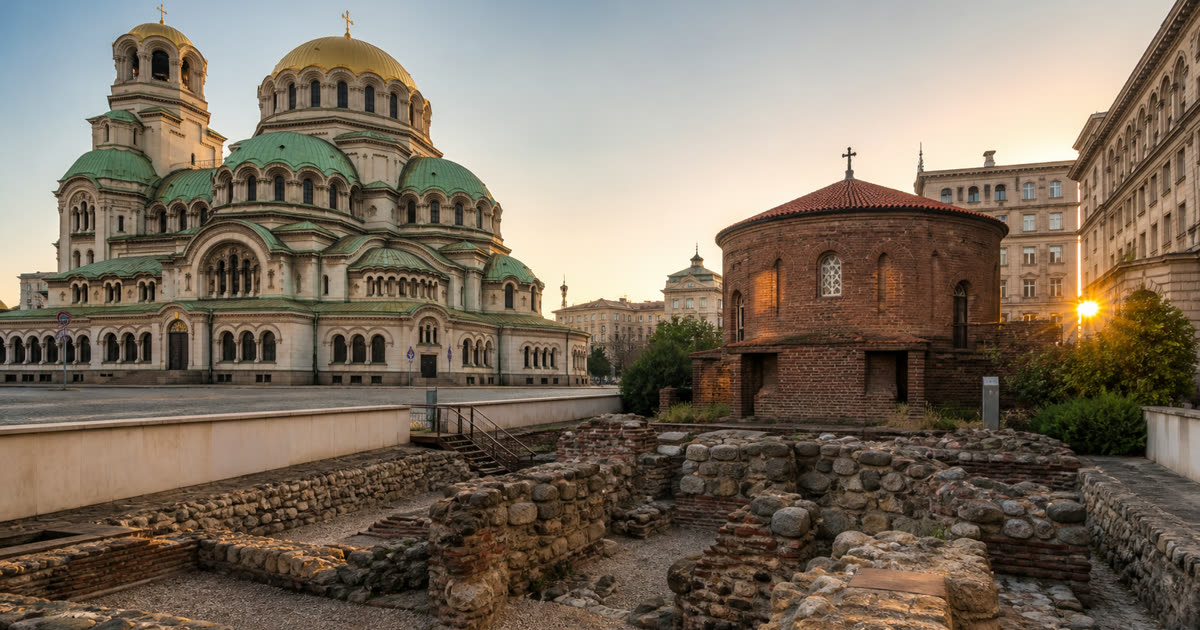
The Alexander Nevsky Cathedral with its golden dome dominates a square where a 5th-century early Christian basilica, a 15th-century Ottoman mosque, and a 19th-century neoclassical palace all stand simultaneously. This layering is not disorder, it is the visual synthesis of 3,000 years of uninterrupted history. Descending into Serdica Metro Station, inaugurated in 1998, passengers waiting for the train look through glass panels at the Roman ruins of Serdica, from the 2nd to 4th-century AD walls, towers, streets, lit up and visible from the platform. It is one of the few cases in the world where a modern metro station was designed around an archaeological site, integrating it as a permanent architectural element. It is not a museum, it is the daily train station of Sofia residents, with 2,000 years of history visible through the glass.

Si ascolta sul posto, con l’app
3

Central Sofia Market Hall

1:08

Guarda in alto: stai in piedi accanto alla Sala del Mercato Centrale di Sofia, sul Boulevard Marie Louise. Gli abitanti locali la chiamano semplicemente Halite. Nel 1907, la città scelse un progetto dell'architetto Naum Torbov, e la costruzione durò due anni. Le porte si aprirono nel 1911, e ancora oggi vi si commercia. Distribuita su 3.200 metri quadrati, è ampiamente considerata il capolavoro di Torbov, realizzato in stile neo-rinascimentale. Sopra l'ingresso principale, noterai il rilievo dello stemma di Sofia di Haralampi Tachev. Una piccola torre dell'orologio con tre volti corona il tetto. Originariamente furono costruiti quattro ingressi; non tutti sono in uso ora. Fino alla fine degli anni Quaranta, il comune affittava circa 170 negozi e banchi, con affitti e qualità dei prodotti strettamente controllati. È stata chiusa nel 1988 per la ricostruzione e ha riaperto a Pasqua 2000. L'azienda israeliana Ashtrom ha rilevato il 75% e ha investito sette milioni di dollari. All'interno oggi: un supermercato e solo una manciata di negozi.

Si ascolta sul posto, con l’app
4

Maria Luiza Boulevard

58s

Continua a camminare e chinati per un momento. Questo viale centrale di Sofia nasconde un piccolo segreto nel suo nome. Oggi onora Maria Luisa di Borbone-Parma, moglie di Ferdinando il Primo. Ma sotto il comunismo, la stessa strada portava il nome di Georgi Dimitrov. Una strada, due identità. Seguila e attraverserai il Lavov Most, il Ponte dei Leoni, uno dei passaggi più emblematici della città. Lungo il percorso, stai attento al Mercato Coperto, alla chiesa di Sveta Nedelya e ai Bagni Pubblici. Sotto i tuoi piedi scorre la nuova stazione della metro intitolata alla stessa principessa. E proprio accanto, una piazza pavimentata di giallo: Principe Alessandro di Battenberg. Nelle vicinanze si trovano la Presidenza, il Consiglio dei Ministri e gli uffici dei deputati, che insieme formano il Largo. La strada va dalla Stazione Centrale al Viale Vitosha, che prosegue fino al Palazzo Nazionale della Cultura.

Si ascolta sul posto, con l’app
5

National Archaeological Museum

52s

Sofia has been the capital of Thrace, a Roman city named Serdica, so beloved by Emperor Constantine the Great that he considered making it the seat of the Empire instead of Byzantium, then a medieval Bulgarian settlement, and finally an Ottoman capital of the Balkans for almost five centuries. The National Archaeological Museum is housed in the former 15th-century Ottoman Grand Mosque, the Boyuk Kamei, built by the Turks after their conquest of the city in 1382. It was the first mosque built in Sofia after the Ottoman conquest, following Bulgarian liberation in 1878, it was converted into a museum. The Ottoman building now houses the most important collection of Bulgarian antiquities, Thracian, Roman, medieval and proto-Bulgarian artefacts. Among the most extraordinary pieces are the Thracian gold treasures, some of the oldest and finest goldwork of the ancient world.

Si ascolta sul posto, con l’app
6

Alexander Nevsky Cathedral Crypt

48s

The Crypt of the Cathedral, originally designed to house the tombs of Bulgarian sovereigns, is home to a museum of icons from across Bulgaria, and forms part of the National Gallery. It is the largest collection of Bulgarian icons in Europe. The exhibition displays over 200 icons dating from the 13th to the 19th century, three fragments of mural paintings, engravings, and other ancient religious artefacts. The oldest date back to the 13th century, among them, the Madonna of Hodeghetria, the only Bulgarian mosaic icon. From the following century, come the icons of Saint Michael and Saint Gabriel, from the Bakavo Monastery. The crypt is open separately from the church, Tuesday to Sunday, and is one of the most important museums of medieval religious art in the Balkans, almost unknown to Western tourism.

Si ascolta sul posto, con l’app
Il racconto completo si ascolta sul posto, con l’appContenuti audio geolocalizzati su Voxter
Scarica Voxter