← All places in Copenhagen The Historic Heart of Copenhagen

The Historic Heart of Copenhagen

4 stops 35 min Copenaghen

From the enchanting Tivoli Gardens to the majestic Christiansborg Palace, through vibrant Strøget and up to Rosenborg Castle: a journey through time among Copenhagen's most iconic landmarks.

The stops

1

Tivoli Gardens

52s

Tivoli Gardens opened on the 15th of August 1843, and is the second-oldest operating amusement park in the world, after Dyrehavsbakken in nearby Klampenborg, also in Denmark. It was founded by Georg Carstensen, who famously convinced King Christian VIII to grant him the land by arguing, when the people are amusing themselves, they do not think about politics. With 4.25 million visitors in 2024, Tivoli is the most visited amusement park in Scandinavia. Walt Disney visited Tivoli multiple times before and after opening Disneyland in 1955, seeking to understand and replicate the park's enchanting atmosphere and seamless integration of gardens, entertainment and dining. Travelling with his wife Lillian and TV personality Art Linkletter, Walt reportedly took copious notes during his visit. He was particularly struck by how Tivoli was, spotless, brightly coloured, and priced within the reach of everyone.

Plays on location, in the app
2

Christiansborg Palace

54s

Christiansborg Palace stands on the site of Absalon's castle from 1167. Bishop Absalon, the founder of Copenhagen, built the original fortress on this island to defend the fishing village. The current palace is the fifth building to stand on the same site. The first was Absalon's medieval castle, demolished by the Hanseatic League in 1369. The second was a Renaissance palace. The third and fourth burned down in 1794 and 1884 respectively. The current neoclassical building was completed in 1928. It is the only building in the world that houses all three branches of a country's government simultaneously. The Danish Parliament, the Supreme Court and the Prime Minister's Office all share the same palace. The royal reception rooms are used by the royal family for state functions. Beneath the palace, the ruins of Absalon's original 12th-century castle are visible through a dedicated archaeological exhibition in the basement.

Plays on location, in the app
3

Stroget

55s

The name Copenhagen comes from the words for Merchant Harbour, Koppmannet Hafen, in Old Danish. Stroget, pronounced roughly Stroi Et, is the main pedestrian street of Copenhagen, running 1.1 kilometers from City Hall Square to Kongens Nytorv. It is one of the longest pedestrian shopping streets in Europe, first pedestrianized in 1962 as an experiment. At the time, Danes were deeply skeptical that removing cars from a shopping street would work. It became a model for pedestrian urban planning across the world. The urban designer Jan Gehl, who later transformed public space thinking worldwide, used Stroget as one of his key case studies. Walking the full length from City Hall Square to Kongens Nytorv takes about 15 minutes without stopping, passing from department stores and high street shops at the western end to jewellers, designer boutiques and the Royal Copenhagen porcelain flagship store at the eastern end.

Plays on location, in the app
4

Rosenborg Castle

55s

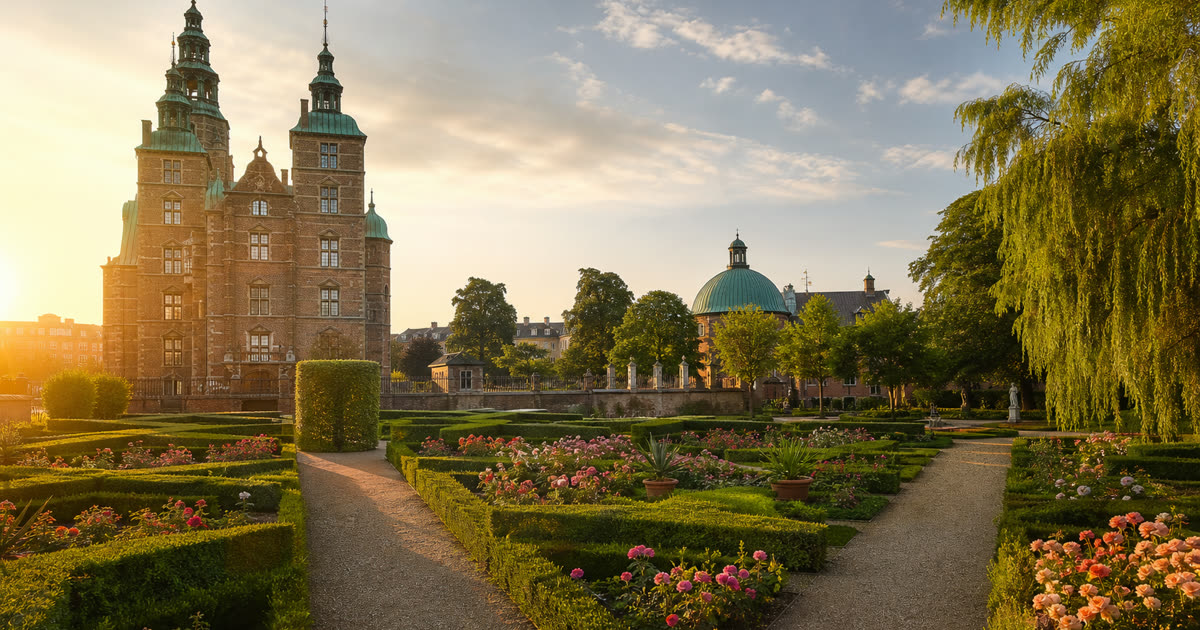
Rosenborg Castle is a Renaissance castle in Copenhagen. The castle was originally built as a country summer house in 1606 and is an example of Christian IV's many architectural projects. It was built in the Dutch Renaissance style and has been expanded several times, finally evolving into its present condition by the year 1624. Christian IV first refers to Rosenborg as his great house in the garden in 1624. Of special interest to tourists is a treasury displaying the crown jewels and the Danish crown regalia located in the castle. The throne chair of Denmark is located in the castle. Following the fire at the first Christiansborg Palace, Rosenborg Castle was temporarily used as a royal residence. Rosenborg Castle once again served as emergency housing during the British attack on Copenhagen. Christian IV died in his bedchamber at Rosenborg in 1648, the same room visitors can see today.

Plays on location, in the app
The full story plays on location, in the appLocation-based audio on Voxter
Get Voxter