← Tutti i luoghi di Zagreb Zagabria Antica: Cuore Storico della Città

Zagabria Antica: Cuore Storico della Città

3 tappe 34 min Zagabria

Passeggia tra le pietre millenarie di Zagabria: dalla maestosa Cattedrale alla vivace Piazza Ban Jelačić, fino alla mitica Porta di Pietra e alla colorata chiesa di San Marco.

Le tappe del percorso

1

Zagreb Cathedral

1:04

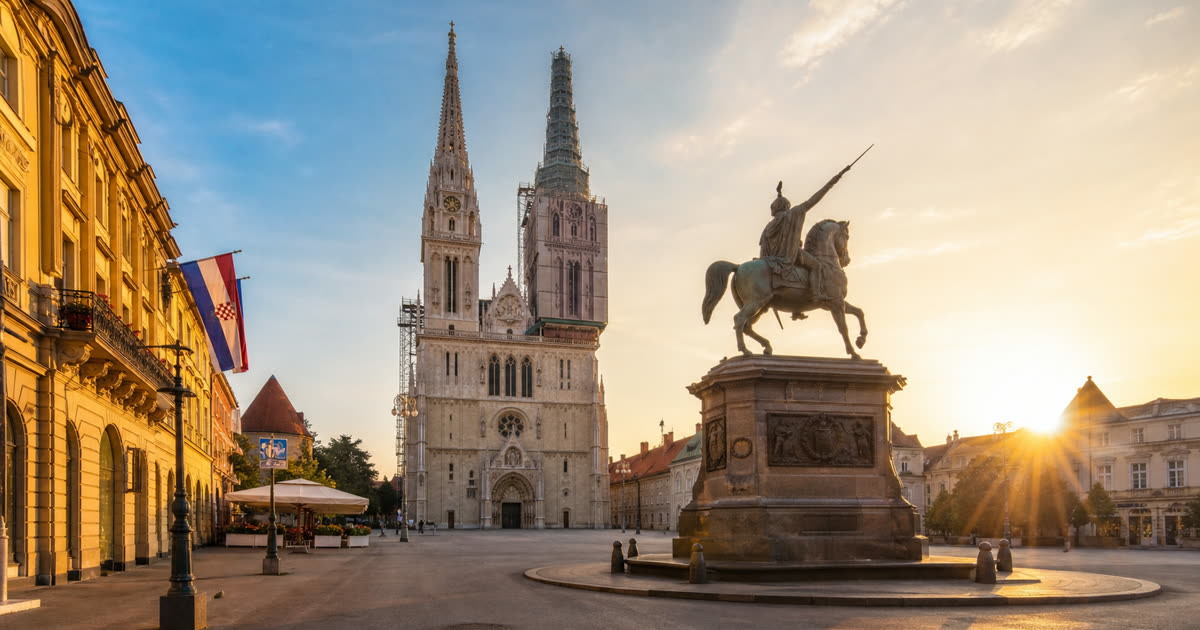
The Zagreb Cathedral is the tallest sacral building in Croatia, and the most monumental sacral building of Gothic architecture southeast of the Alps. The original cathedral was completed in 1217 in Romanesque style, but it was heavily damaged during the Tatar invasion of 1242. The cathedral's origins date back to the 11th century, though it has been rebuilt several times due to invasions and natural disasters, most notably after the Mongol attack in the 13th century, and the devastating earthquake of 1880, when it was reconstructed in the Neo-Gothic style that defines its present form. The first recorded appearance of the name Zagreb dates from 1094, at which time the city existed as two different city centres. The smaller, eastern capital, inhabited mainly by clergy and housing Zagreb Cathedral, and the larger, western gredek, inhabited mainly by craftsmen and merchants. In 2020, a magnitude 5.5 earthquake struck Zagreb. The cathedral lost the cross of one of its twin spires. It is currently undergoing extensive restoration.

Si ascolta sul posto, con l’app
2

Stone Gate

48s

The Stone Gate is the last remaining entrance to the medieval fortified city of Greideck. In 1731, a fire destroyed almost all the wooden buildings around the gate. According to local tradition, when the ruins were cleared, a painting of the Virgin Mary was found intact among the ashes, completely undamaged by the flames. The painting was interpreted as miraculous, and a chapel was built on the spot inside the gate arch. Today the Stone Gate is a permanent open-air shrine. Candles burn day and night, votive plaques cover the walls, and Zagrebers stop here to pray on their way through the city. It is one of the most intimate and unexpected sacred spaces in Central Europe. Not a grand church, but an arch in a medieval city wall, passed through by thousands of people every day, transformed by one fire in 1731 into a place of pilgrimage.

Si ascolta sul posto, con l’app
3

St Mark's Church Zagreb

49s

The first place not to be missed in Zagreb's upper town is St. Mark's Square, with its 13th-century church. The church has a typical bulbous bell tower and a roof with coloured tiles representing the city's crest, and a symbol of the unification of the kingdoms of Croatia, Dalmatia and Slavonia. The tiled roof, restored in 1880, displays two coats of arms in a mosaic of coloured glazed tiles. On the left the combined arms of the kingdom of Croatia, Dalmatia and Slavonia. On the right, the emblem of Zagreb itself. It has become the most photographed image of the city. The church stands in the heart of the upper town, flanked by the Croatian Parliament and the Government Building, a medieval church between the two seats of the modern state. St. Mark's Square is the political heart of Croatia. Laws are passed in buildings that have looked at this church's tiled roof for centuries.

Si ascolta sul posto, con l’app
Il racconto completo si ascolta sul posto, con l’appContenuti audio geolocalizzati su Voxter
Scarica Voxter