← Tutti i luoghi di Vienna Vienna Nascosta: Segreti nel Cuore della Città

Vienna Nascosta: Segreti nel Cuore della Città

4 tappe 34 min Vienna

Dalla Colonna della Peste al Graben fino alla cripta imperiale e alla casa che scandalizzò una città: scopri le curiosità più sorprendenti nascoste nel centro storico di Vienna.

Le tappe del percorso

1

Graben — Plague Column

50s

The Greben is one of the oldest and most elegant pedestrian streets in Vienna. Its name means ditch, because in Roman times it was the defensive moat of the Roman castrum of Vindabona. At the centre of the Greben stands the plague column, the Pestsau, erected in 1693 by Emperor Leopold I, to give thanks to God for the end of the great plague epidemic of 1679, which had killed around one third of Vienna's population. The Baroque sculpture stands 21 metres tall and depicts the Emperor kneeling before the Holy Trinity, with the figure of faith vanquishing the plague. It was designed by Johann Bernhard Fischer von Erlach, the same architect who would later design the Karlskirche. The Greben surrounding the column is still today one of the most frequented promenades in Vienna, just as it was in the 17th century when the column was inaugurated.

Si ascolta sul posto, con l’app
2

St. Stephen's Cathedral — Stephansplatz 3

49s

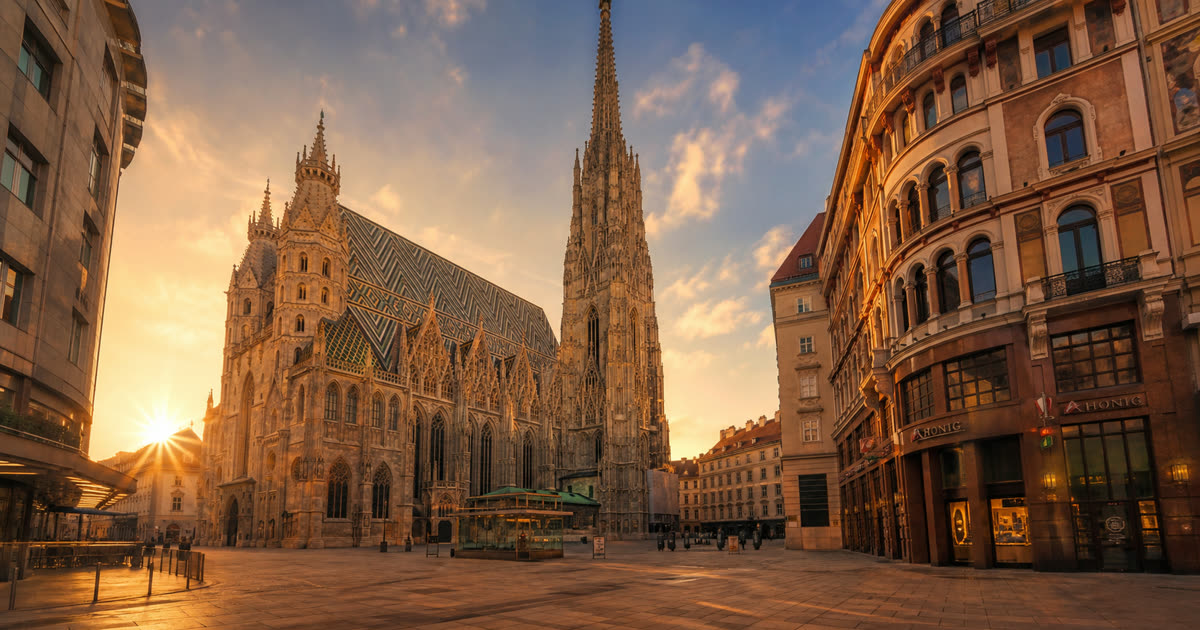
La Cattedrale di Santo Stefano risale al 1137, sebbene sia stata ampliata e restaurata nel corso dei secoli, arricchendosi notevolmente di elementi romanici, gotici e rinascimentali. Sia il matrimonio che il funerale di Mozart si sono tenuti qui. È stata una chiesa cattedrale dal 1365, una sede vescovile dal 1469-1479, e la Chiesa Metropolitana dell'Arcivescovo di Vienna dal 1723. Il tetto è coperto da 230.000 piastrelle di ceramica smaltata disposte a formare il doppio stemma imperiale asburgico, visibile dall'alto e dai tetti circostanti. Le catacombe sotto la cattedrale contengono le urne con le viscere degli imperatori asburgici. Il corpo era sepolto nella cripta imperiale dei Kaposi, il cuore nella Herzgrift presso l'Augustinikirche, gli organi interni qui. Tre luoghi per un singolo imperatore.

Si ascolta sul posto, con l’app
3

Imperial Crypt of the Capuchins

49s

Located beneath the Capuchin Church, very close to the Hofburg, the imperial crypt of Vienna houses more than 140 remains. Emperors, princesses, duchesses, kings and archdukes find their eternal rest in this burial site, the Habsburgs' preferred resting place since the 17th century. Among the most famous tombs are those of Empress Elizabeth, Cissi, her husband Emperor Franz Joseph I, and Archduke Rudolf. The Habsburg funeral protocol required that the emperor's body be divided into three parts, the body here, the heart at the Augustiner Kirche in a dedicated silver urn, and the viscera in the catacombs of the Stephansdom. This practice, known as tripartite burial, was followed uninterrupted by the Habsburgs for over two centuries, until Emperor Franz Joseph in 1916.

Si ascolta sul posto, con l’app
4

Loos House

49s

Over a hundred years ago, Vienna was the scene of an architectural scandal. The pioneer of Viennese modernism, Adolf Loos, built a revolutionary building directly opposite the imperial Hofburg, the Loos House. Its facade, devoid of the ornate decorations typical of the era, outraged Emperor Franz Joseph I, who reportedly called it, a house without eyebrows. The building was completed in 1911, five years after construction began, and following years of controversy and work stoppages. In 1908 Loos had published the essay, Ornament and Crime, arguing that decorating objects was a crime against civilization. The Loos House on Michaelerplatz, was his practical response to the Baroque imperial aesthetic surrounding it. Franz Joseph it is said, never again opened the windows of his apartments that looked out onto the building's facade.

Si ascolta sul posto, con l’app
Il racconto completo si ascolta sul posto, con l’appContenuti audio geolocalizzati su Voxter
Scarica Voxter