← Tutti i luoghi di Reykjavík Reykjavik: Cuore di Storia e Cultura

Reykjavik: Cuore di Storia e Cultura

5 tappe 40 min Reykjavik

Dal maestoso campanile di Hallgrímskirkja al Parlamento più antico del mondo, passando per le radici vichinghe della città. Un viaggio nel tempo nel cuore pulsante di Reykjavik.

Le tappe del percorso

1

Hallgrimskirkja

58s

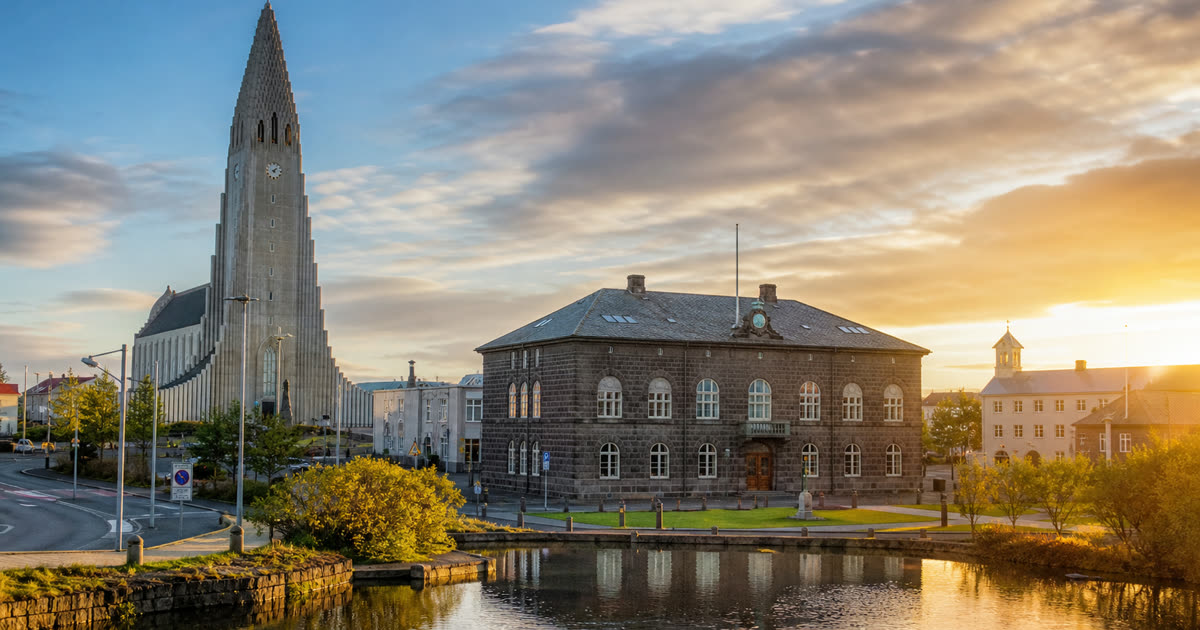
Hallgrímskirkja is a 74.5 meter Lutheran church in central Reykjavik, and the most recognized landmark in Iceland. Designed by architect Gudjon Samuelsson, its towering facade resembles the hexagonal basalt columns found across Iceland's volcanic landscape. Construction started in 1945 and finished in 1986, it took 41 years to complete. It is the tallest church in Iceland, and the second tallest building in the country. The church is named after the 17th century clergyman and poet Hallgrímur Petarsson, author of the Passion Hymns, a cycle of 50 hymns that became one of the most read books in Icelandic history, and was recited aloud in homes across the country for centuries. Standing in front of the church is the statue of Leifur Íriksson, the Viking explorer believed to have reached North America five centuries before Columbus. The statue was a gift from the United States in 1930, to commemorate the thousand-year anniversary of Iceland's parliament.

Si ascolta sul posto, con l’app
2

National Museum of Iceland

56s

The National Museum of Iceland, located at Suðugata 41, displays objects providing great insight into the nation's history and culture across 1-200 years. The museum was established on 24 February 1863. Its permanent exhibition, The Making of a Nation, is conceived as a journey through Iceland's history, starting with the ship that brought the island's first settlers in the 9th century, and ending with photographs of Keflavík Airport opening Iceland to the world. The museum houses over 2,000 objects, including Viking relics, medieval engravings and objects from Iceland's conversion to Christianity. One of the most significant pieces is a portable wooden door panel from the 11th century church at Valfjöfstadur, carved with a knight and a dragon, one of the finest examples of medieval woodcarving in Scandinavia. The museum also holds 6.5 million photographs, the largest collection of images in Iceland.

Si ascolta sul posto, con l’app
3

Settlement Exhibition Reykjavik Adalstraeti

49s

At Æthelstræti 10 in Reykjavík's city center, you can explore how the city developed from Iceland's settlement period. Æthelstræti is considered the oldest street in Reykjavík, located in the area of the original settlement. During construction work in 2001, excavations uncovered the remains of a Viking longhouse, dating from around 871 A.D., one of the oldest man-made structures ever found in Iceland. The longhouse was built by some of the first Norse settlers to arrive on the island, roughly coinciding with the date given in the Book of Settlements for Iceland's first permanent inhabitant, Ingólfur Arnarson. The exhibition was built around the ruins themselves, which remain in situ. You walk through a museum built directly over a Viking house that was occupied over 1, 100 years ago. Outside, Æthelstræti is the oldest continuously used street in Iceland.

Si ascolta sul posto, con l’app
4

Domkirkjan Cathedral

51s

Located in Østuvalur Square right next to the Parliament House, Domkirchen, the Reykjavik Cathedral, is modest in size, but has played a pivotal role in Iceland's religious and political history. Built in 1796, it is an excellent example of Icelandic neoclassical architecture, with clean lines and restrained design. It has been the site of numerous significant events, including the declaration of Iceland's independence from Denmark in 1944, celebrated here before the crowd moved to Þingvalir. The cathedral holds around 270 people. It is the seat of the Bishop of Iceland and the official church of the Icelandic state. Yet it is smaller than many parish churches in mainland Europe. Over 60% of Icelanders today identify as non-religious. The cathedral remains open, services are still held regularly, and entry is free.

Si ascolta sul posto, con l’app
5

Althingi Parliament House

52s

Parliament House, which stands on Østavola Square, was built in 1880-81. The Altingi Iceland's Parliament is one of the oldest parliamentary institutions in the world, having been established in 930 AD at Þingvellir, a site of volcanic plains 40 km east of Reykjavik. For over nine centuries it met in the open air at Þingvellir before moving to this modest stone building in the capital in 1881. The statue in Østavola Square beside the Parliament depicts Jón Sigurðarson, the leader of Iceland's independence movement against Danish rule. Iceland achieved full independence on 17 June 1944, a date chosen to coincide with Jón Sigurðarson's birthday. The current Parliament building is deliberately unpretentious, a small grey stone structure with no guards, no gates, no barriers. In Iceland the Parliament belongs to the people, it always has.

Si ascolta sul posto, con l’app
Il racconto completo si ascolta sul posto, con l’appContenuti audio geolocalizzati su Voxter
Scarica Voxter